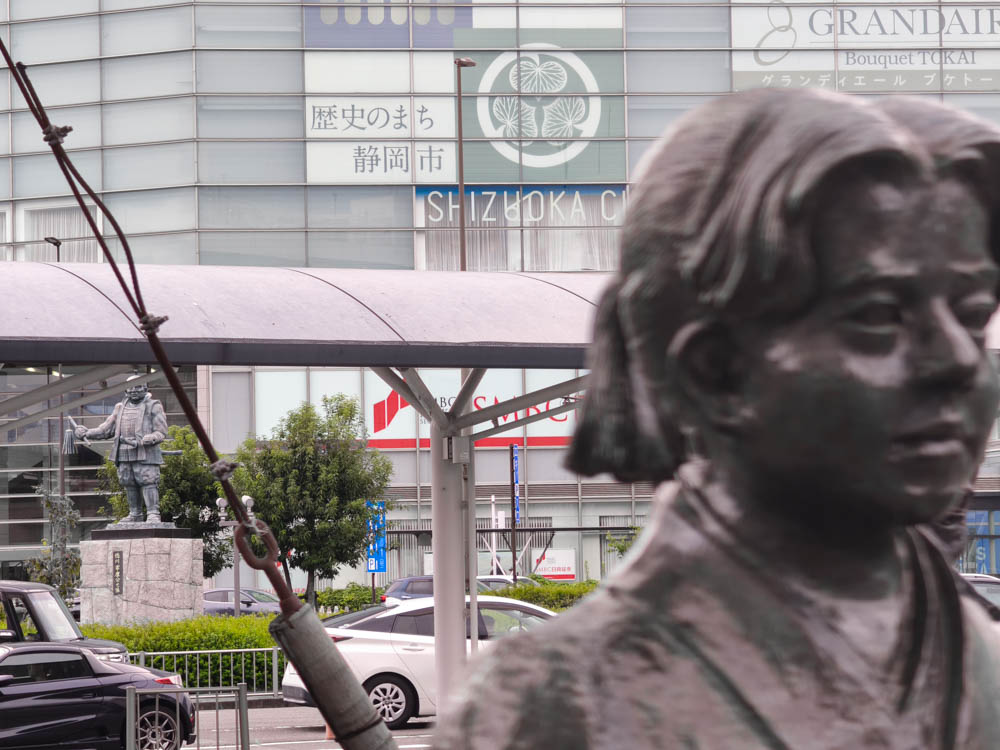
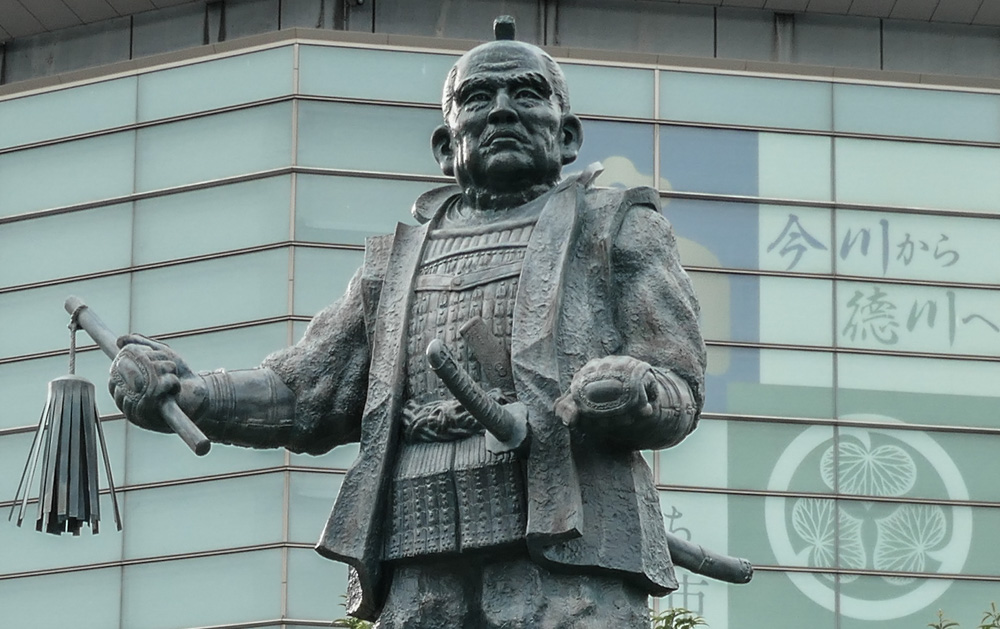
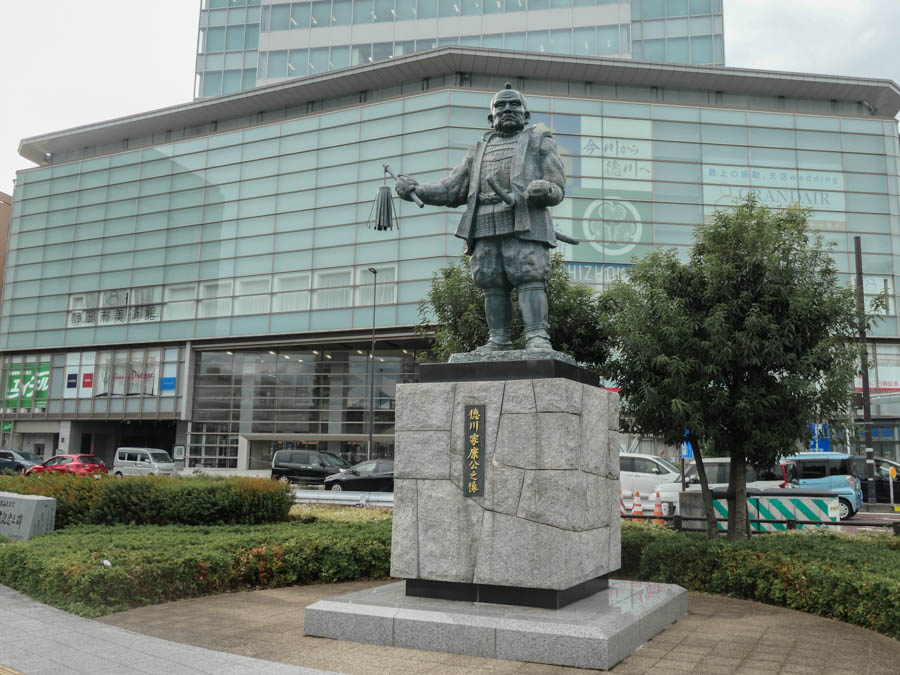
A statue of Tokugawa Ieyasu, one of the most significant figures in Japanese history, stands opposite JR Shizuoka Station. Ieyasu (1543–1616), the founder and first shogun of the Tokugawa shogunate, inaugurated a period of military rule that lasted over 260 years, until 1868. His rule brought a long period of relative peace and stability to Japan.
Shizuoka maintains a special connection with Ieyasu. He spent significant periods of his life in the city, then known as Sumpu, and resided at Sumpu Castle, where he spent his final years and died in 1616 at the age of 73. Today, his statue serves as a reminder of the city’s deep bond with the legendary shogun.
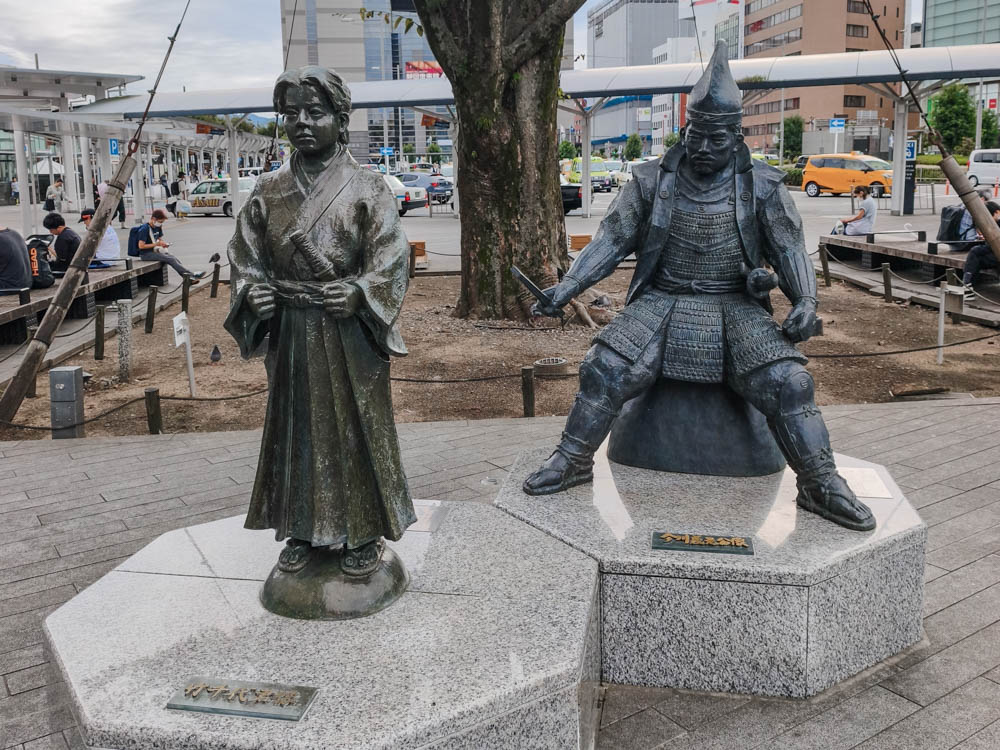
Near the statue of Ieyasu, at the North Exit Plaza of JR Shizuoka Station, there are two other statues. One shows young Matsudaira Takechiyo, the childhood name of Tokugawa Ieyasu. It represents the years he spent in the area as a hostage and ward of the Imagawa clan. The other statue depicts the head of the clan, Imagawa Yoshimoto, a powerful daimyo of the Sengoku period and one of the three major warlords who dominated the Tokaido region.